Graduate Diploma in Disaster and Terror Medicine
Course code: GD-DTM
January
AUD $40,992 (2026 indicative first year fee). Commonwealth Supported Places (CSPs) are not available
January
AUD $41,984 (2026 indicative first year fee)
IELTS 7.0: with no band less than 7.0
Course structure
Overview
What will you learn?
By studying this course, you will develop essential problem-solving skills and expertise in this specialist area, including logistics, prevention, planning, responses, recovery, and policy development. You will gain an understanding of domestic and international factors involved in managing complex disaster and terror events within a clinical setting.
The Graduate Diploma in Disaster and Terror Medicine is delivered online, with an intensive 10-day face-to-face program giving you the opportunity to put what you've learned into practice via a series of bespoke workshops.
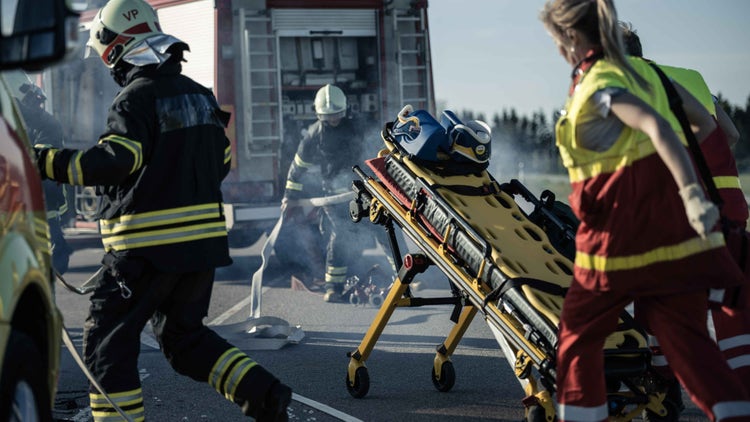
Led by Australian and internationally renowned experts, you'll apply your newly-acquired knowledge to a series of practical activities and simulation exercises designed to test your ability to problem-solve across a range of disaster management situations, including active shooter mass casualty simulations, and hazardous materials training.
Teaching dates for face-to-face workshops
Course structure
The Graduate Diploma in Disaster and Terror Medicine is comprised of eight subjects (100 credit points).
For further information on the subjects offered please visit: Course structure: Graduate Diploma in Disaster and Terror Medicine (GD-DTM) — The University of Melbourne Handbook (unimelb.edu.au)
Explore this course
Explore the subjects you could choose as part of this diploma.
| Accordion | |
|---|---|
| Disaster Medicine Principles & Responses · 12.5 pts |
This subject will provide the student with the key skills and knowledge required to evaluate the nature and extent of disaster events from a clinical and healthcare management perspective. Students will learn to apply existing models of preparedness, and plan the various levels of response (community, health service, national and global), as well as consider resource utilisation, resilience and recovery. Students will engage with authentic cases and simulations to develop management strategies for a range of disaster situations. Topics covered will include:
Teaching/learning formats include:
The informal exchange of insights and experiences among participants is a key aspect of learning. |
| Terror Medicine Principles & Responses · 12.5 pts |
This subject will provide essential skills and knowledge for recognising and responding to specific terror events and their corresponding clinical and health service management. Students will learn to apply relevant frameworks for evaluating terror events. They will practise planning and applying management strategies to authentic scenarios and simulations, developing problem solving and communication skills relevant to extreme conditions and crisis situations. Topics covered will include:
Teaching/learning formats include:
|
| Clinical Leadership During Crises · 12.5 pts |
Responses to disasters and terror events require leadership, and many clinicians and health service managers anticipate taking on leadership positions or find themselves in leadership roles, without any formal education in leadership. This can have negative consequences for the leader, colleagues, patients and healthcare organisations. During such crises, leaders must be able to rapidly assess a complex situation, often with limited and fragmented information, while providing effective communication to colleagues, patients and healthcare organisations. The purpose of this subject is to provide clinical and health service leaders (and aspiring leaders) with knowledge of leadership practices during crisis management and the opportunity to implement this learning and acquire new skills. Subject content will be grounded in evidence-based knowledge produced by leadership scholars and practised by leaders in Disaster and Terror Medicine and Health Management. Topics covered will include:
Teaching/learning formats include:
The informal exchange of insights and experiences among participants is a key aspect of learning. |
| Managing Complex Disasters · 12.5 pts |
Management of complex disasters in a healthcare setting requires specific expertise. These situations are infrequent and require a particular skill set to ensure appropriate management. Students will learn to manage complex disasters in healthcare settings. The subject will also provide students with an ethical framework for effective decision making in complex disasters, and strategies for managing activity with multiple agencies. Students will review the impact of complex disasters on humanitarian workers and responders. Topics covered will include:
Teaching/learning formats
|
| Human Factors in Critical Care · 12.5 pts |
Every day in healthcare, experts are making split second life-or-death decisions. These are often made when the information they have is scarce or incomplete. Health professionals react rapidly to emergency circumstances performing complex procedures from memory. Human Factors is the science of redesigning the environment, the equipment, the training and processes to ensure every decision is well-informed and every action is performed accurately. Human Factors Engineering principles can help guide us in designing the work to be safer and more efficient. For example, redesigning how emergencies are managed to ensure the correct decisions and actions are taken, even when stress levels are high. It’s about optimizing the role of the human within the system and designing with health professionals and patients in mind. This subject will provide the student with an introduction to the science of Human Factors/Ergonomics (HF/E) as applied to critical care medicine and clinical care. It will discuss the scope of HF/E, key concepts and tools in Human Factors research and engineering and emerging views of safety science. Students will apply HF/E principles to their own context and consider how traditional methods of safety can be extended with new techniques. Topics covered will include:
Teaching/learning formats include:
|
| Advanced Toxicology and Terror · 12.5 pts |
This subject provides an understanding of the principles of toxicology as related to exposures commonly associated with terror and mass casualty events. The student will explore how poisons interact with biological systems to produce clinical toxicity (pharmacodynamics) and how the human body reacts to poisons to promote detoxification or elimination (pharmacokinetics). The interaction of poisons on receptor families with subsequent production of recognisable patterns of clinical toxicity (toxidromes) and their importance in aiding diagnosis will be discussed. A discussion of general management of the poisoned patients will emphasise approaches to decontamination, enhanced elimination, utilisation of antidotes and supportive care particularly relating to common terror and mass casualty exposures. Topics covered Toxicokinetics, toxicodynamics including an overview of autonomic pharmacology, assessment of the poisoned patient including toxidromes, general management of the poisoned patient, approaches to decontamination, approaches to enhanced elimination, management of toxicity including use of antidotes, real-world toxicological terror and mass casualty events. Teaching/learning formats
|
| Accordion | |
|---|---|
| Foundations of Public Health · 12.5 pts |
This subject is a compulsory subject within the Master of Public Health. It lays the foundation for the degree and provides an orientation to the field of public health. It provides a critical overview of public health historical development, conceptual underpinnings and practice in the following domains. History and distinguishing features of public health and population health: The historical development of public health is traced. The distinguishing features of public health, emphasising the health of groups and populations rather than a focus on the health of an individual, are presented and explored. Key points of transition in the health of populations over time are identified. The scientific disciplines that make up the toolbox of modern population health are described. Determinants of the health of individuals, groups and populations: Determinants of health affecting the health of individuals, and populations are identified, recognising that social determinants work in concert with environmental and biological factors. The health of Indigenous people in Australia is examined and resources provided to assist in understanding common influences on the health of Indigenous people world-wide. The increasing importance of health and human rights locally and globally is discussed, including an examination of the ethical frameworks relevant to public health practice. Strategies and Systems: Major strategies and approaches to public health including health protection, health improvement and health care quality assessment are presented, with illustrations from local and international experience. The elements and function of health systems are defined and the roles of principal public health agencies internationally and nationally are described. Achievements and challenges: The significant achievements in public health from the late 20 th century through to the 21 st century are identified and emerging challenges and possible solutions are explored, including in relation to Indigenous populations. |
| Health Policy · 12.5 pts |
The subject explores the policy decisions, usually made by governments, that determine present and future country or regional level objectives relating to health services; programs; and the regulatory, organisational, social, cultural, physical and natural environments that contribute to population health and well-being. The subject explores the nature of health policy, types of policy instruments, and policy making processes including agenda setting and policy influencing frameworks and theories. The role of evidence in policy formation including the significance of the balance between effectiveness, efficiency and equity as objectives of health policy will be debated. In doing so, students will be introduced to the importance and process of policy analysis and explore the relevant legal, political, managerial, sociological, ethical, epidemiological and economic perspectives to instrument selection and policy implementation across a range of health policy contexts. Australian and international country contexts will be used throughout the subject. |
| Health Program Evaluation 1 · 12.5 pts |
This subject examines the diverse purposes health program evaluations can serve and the wide range of environments in which health program evaluations are conducted. Using Australian and overseas evaluation examples, students gain an overview of conceptual and methodological issues in the key evaluation approaches. The three major stages in the conduct of an evaluation are covered: planning and negotiating the terms and design of the evaluation; data collection and analysis; and the provision of findings. Each stage is considered through example and critique of those examples, with opportunities to apply these skills in the development of an evaluation plan for a real, work-based program. |
| Comparative Health Systems · 12.5 pts |
A thorough comprehension of the different institutions, structures and processes that constitute health systems globally provides a strong platform for further studies and varied career paths in population and global health. This subject provides students with the analytical frameworks to explore the social and political dynamics, institutions and structures that constitute health systems globally. This subject is delivered by a cross-disciplinary team of experts working in health systems strengthening and analysis, and draws on contemporary research and examples from across Australia, the Asia and Pacific regions and other global contexts. Students of this subject will develop and apply skills in critical and comparative analysis of health systems in a range of countries and in settings with varied levels of socio-economic development. Issues addressed in this subject include, but may not be limited to: global disparities in health system expenditures and outcomes; the characteristics of different health financing systems; health system structures; health system reform and performance measurement; health system strengthening approaches and strategies; intergovernmental relations and development assistance for health; health workforce supply and policy; general practice and primary healthcare; complementary health systems and health system orientation for Indigenous peoples; and the multi-level policy processes that inform health system decision-making. Comparative Health Systems is a dual delivery block mode intensive subject. This means that the assessable material is delivered through self-directed online modules that students complete over a six-week period. The online modules offer flexibility in relation to the timing of when students complete them, or what hours of the day you may choose to study. However, allocated modules must be completed in time to allow effective participation in live interactive sessions that are linked with those modules. Live interactive sessions are held on six days across the six-week period, in which module material is discussed with fellow students and lecturers. Students may choose to attend these live sessions online or face to face. Students are expected to commit approximately 8-10 hours to learning each week, comprised of learning modules, reading, discussion board activities, group work and live sessions. This six-week teaching period is followed by independent learning towards a major assessment to be completed over six weeks. |
| Planetary and Global Health · 12.5 pts |
Improving global health in the long term requires a deep appreciation of the impact of environmental issues at local, national and global scales. To facilitate depth of learning, this subject focuses on five key public health threats that require complex multidisciplinary solutions, which are: climate change; poor sanitation and water security; nuclear weapons; air pollution and COVID-19. Students of this subject will explore these interrelated planetary challenges, their profound implications for population health, and the demand for high level integrated problem solving in the coming decades. Students will become familiar with and critique relevant policies and international agreements pertaining to environmental health. Students will also learn to identify complex systems and barriers implicated in processes of responding to environmental challenges on global, national and local scales. This subject involves interactive sessions and is facilitated by internationally recognised experts in this field. Planetary and Global Health is a dual delivery block mode intensive subject. This means that the assessable material is delivered through self-directed online modules that students complete over a two-week period. The online modules offer flexibility in relation to the timing of when students complete them, or what hours of the day you may choose to study. However, allocated modules must be completed in time to allow effective participation in live interactive sessions that are linked with those modules. Live interactive sessions are held on six days across the two week period, in which module material is discussed with fellow students and lecturers. Students may choose to attend these live sessions online or face to face. Students are expected to commit approximately 40 hours to learning each week, comprised of learning modules, reading, discussion board activities, group work and live sessions. This two-week teaching period is followed by group work and independent learning towards three pieces of assessment to be completed over four weeks. |
| Leading Healthcare Change for Impact · 12.5 pts |
Today's healthcare system is multifaceted, complicated and often resistant to change. This subject will examine strategies for leading change in clinical settings and healthcare organisations. Participants will learn how to build and lead change initiatives, as well as to access resources, negotiate with others and effectively deal with obstacles as they implement their innovative programs. Topics covered will include:
Teaching/learning formats include:
The informal exchange of insights and experiences among participants is a key aspect of learning. |
| Pandemic Preparedness and Response · 12.5 pts |
This subject explores pandemic prevention, preparedness, and response from a multidisciplinary perspective using frameworks and developing skills that are often transferrable to other large-scale health emergencies. Focusing on varied pandemic examples, including but not limited to: SARS, MERS, Zika, Rabies, Swine and Avian Influenza, Ebola, HIV/AIDS and COVID-19, the subject provides students with a multi-sectoral framework through which to appraise a range of prevention, preparedness, and response efforts across diverse country contexts. Students will learn how to conceptualise effective pandemic preventions, preparedness, and response efforts as stemming from the intersection of global systems including human and animal health, political, economic, cultural, and environmental systems. A wide range of pandemic and country case studies are presented, with particular attention to equity and inclusion in terms of the diverse and specific needs of, and impacts on, varied populations. The subject emphasises lessons learnt that can be translated into future and ongoing pandemic and other health emergency prevention, preparedness, and response efforts, as well as highlighting key unresolved issues which need attention. This dual-delivery subject will be delivered by a multidisciplinary team of experts from Australia and around the world. Topics covered include multi-sectoral preparedness efforts; One Health, climate change and pandemics; outbreak risk assessment and surveillance; health system resilience and surge capacity; maintaining essential health services; communication for health emergencies and pandemics; community engagement; non-pharmaceutical interventions; dimensions of equity and vulnerability in pandemics; technological advancements and emerging paradigms post COVID; and the politics and economics of pandemics. |
| Disaster and Humanitarian Aid · 12.5 pts |
This subject explores emergency relief in crisis situations, including both ‘natural’ disasters and armed conflict (or combinations thereof). We will discuss the dynamics of different kinds of disasters, such as droughts, earthquakes, floods, cyclones, armed conflict and displacement, as well as ‘complex emergencies’ where ‘natural’ disasters intermesh with man-made dynamics. Central to ‘natural’ and man-made disasters is the question of vulnerability and resilience: contrary to what international media images tend to suggest, the first response to disaster is always local, and the resilience of the people affected is determining for longer-term outcomes. But international responses can of course play a major role. The subject will therefore explore: international humanitarian principles, policies, and guidelines; the everyday life of humanitarian work; and the challenges and dilemmas of humanitarian aid: how it gets entangled with local political economies; how it gets embroiled in dynamics of conflict; and how it can in fact become part of the problem. We will also examine differences and interlinkages between humanitarian and development interventions, as well as the supposed humanitarian-development ‘continuum’ – the idea that humanitarianism is something that occurs in times of crisis, and that this then gives way to development once the situation is back to ‘normal’. As we will see, disasters are not at all exceptional. They are a normal part of human life; and with the impact of development and climate change, human exposure to disasters is only increasing. Instead of thinking of disasters as unique and exceptional events, shouldn't we be thinking about ‘living with risk’? And, if so, how can that be done? |