Graduate Diploma in Urban Horticulture
Course code: GD-URBHORT
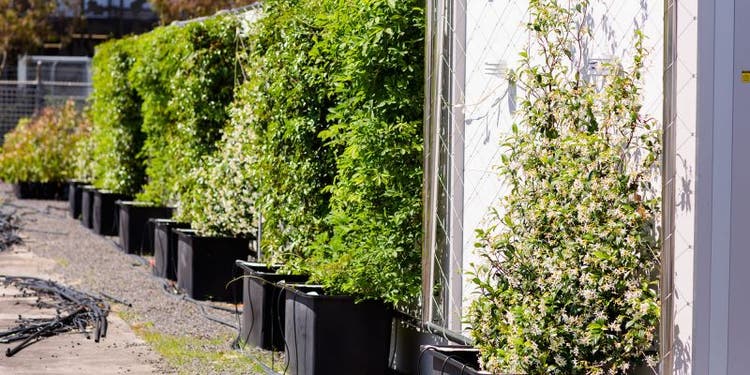
March, July
AUD $40,992 (2026 indicative first year fee). Commonwealth Supported Places (CSPs) are not available
March, July
AUD $58,976 (2026 indicative first year fee)
IELTS 6.5: with no band less than 6.0
Course structure
Overview
Course structure
The Graduate Diploma in Urban Horticulture is a 100-point program, made up of:
- Compulsory core subjects (4 subjects, 50 points)
- Elective subjects (4 subjects, 50 points)
You’ll be able to select elective subjects from a broad range, to follow your own interests.
You'll leave the course with knowledge and practical skills in the planning, installation and management of vegetation across a range of urban landscape applications.
You'll study the science, function and identification of landscape plants, as well as their propagation, cultivation and use. You'll also learn how soil, water and growing conditions impact plants.
Explore this course
Explore the subjects you could choose as part of this diploma.
Complete all the following subjects:
| Accordion | |
|---|---|
| Urban Soils, Substrates and Water · 12.5 pts |
Urban soils can present distinct and unique challenges to the land manager, landscape architect or horticulturist responsible for developing, maintaining or improving urban landscapes. Often compacted, contaminated, or otherwise unsuitable for plant growth, urban soils require assessment, solutions and practical methods to ensure successful outcomes. This applications-oriented subject covers several fundamental soil science issues with direct relevance to urban landscape impacts, uses and requirements. Topics covered include compaction, nutrition, contamination, water supply, drainage and structural soils. |
| Horticultural Plant Science · 12.5 pts |
This subject considers the evolution of plants, their structure and function, how they reproduce, cell physiology, energy transformations, metabolism, photosynthesis, water and nutrient uptake and transport, plant nutrition and whole plant physiology. Upon completion of this subject, students should be able to demonstrate their understanding of the structure of plant cells and tissues, the basic processes involved in the growth of plants and the integration of these processes in the physiology of plant growth. |
| Plant Production and Establishment · 12.5 pts |
This subject provides an overview of the horticultural industry from plant production to installation and establishment of plants in the landscape. It introduces plant propagation techniques and plant growing systems; site analysis, with specific reference to the properties of urban soils and related issues affecting plant performance; plant quality; planting techniques; plant establishment; water delivery and management issues; and the plant maintenance activities during production and at planting that are required for designed landscapes to succeed. |
| Plants in the Landscape · 12.5 pts |
This subject explores the identification, selection and design use of plants in urban landscapes. The content includes an introduction to botanical nomenclature, plant selection, sources of information, planting design, planting plans, the design use of major plant groups, and recognition and identification of representative plants. Case studies of plant use and management in urban landscapes and relevant site visits are also discussed. |
Select four of the following subjects:
| Accordion | |
|---|---|
| Managing Urban Landscapes · 12.5 pts |
This subject will discuss how urban landscapes are managed. Students will study policy, planning and process issues; landscape and park typology and classification, community consultation; structures, systems, classifications and contractual relationships in urban landscapes; landscape documentation, project planning and implementation; management of urban vegetation; sustainability concepts and benchmarks and case-studies/examples of urban landscape management practice. Guest industry speakers will provide real world examples and experiences relevant to urban landscape management |
| Flora of Victoria · 12.5 pts |
This subject is designed for students wishing to take a summer course, and who are interested in the biology of native plants and plant communities and environments in Victoria. It is suited to students studying environmental science or environmental studies. Topics covered include:
|
| Sustainable Landscapes · 12.5 pts |
Sustainable Landscapes combines social and ecological disciplines to consider the management of urban and rural/regional landscapes for sustainable futures. Subject teaching includes weekly lectures and a 1x weekend field trip to observe and discuss management of landscapes for sustainable outcomes. Australian and overseas case studies are drawn upon to cover the following topics:
The content and the issues raised will draw upon and integrate theory, knowledge and practices from different disciplines familiarising students with systems theory and how it is integral to framing an understanding of landscape management. Theories of complex adaptive systems, social ecological systems, uncertainty, resilience and complexity will also frame the investigation of these issues. Landscape ecology sciences, social sciences (including cultural geographies) and policy frameworks will be drawn upon in analysing and evaluating landscapes and their futures, with a strong focus on community-based knowledge systems. Students will engage deeply with the literature that informs these ideas and will develop a critical understanding of their value and limitations. |
| Spatial Tools for Ecosystem Management · 12.5 pts |
The course covers the fundamentals of spatial analysis for ecosystem management and conservation problems. Students will develop skills in the application of remote sensing and Geographic Information Systems (GIS) for landscape analysis of data. Methodologies for collecting, analysing and interpreting spatial data will be considered through theoretical and practical approaches. These will include data collected by drones through to satellite derived measures at a continental to global scale. Students will learn the spatial skills essential to environmental management by applying industry standard tools and methods. Finally, students will develop an understanding of the emerging technologies in data collection and analysis. |
| Water Sensitive Urban Design · 12.5 pts |
There is increasing recognition around the world of the threats facing urban environments and their water resources. In many cities water demand is approaching or exceeding limits of sustainability, leading to increasing interest in alternative water sources, such as stormwater harvesting, wastewater recycling and desalination. At the same time, receiving environments such as urban streams and bays are threatened by pollution and erosion from stormwater runoff, or eutrophication due to discharge of poorly-treated wastewater. There is also increasing recognition of the importance of water in the urban landscape, and of its role in the welfare and health of humans. The concept of “water sensitive urban design” (WSUD), also known as Integrated Urban Water Management (IUWM) has developed in response to these changes. It aims to better integrate water into the urban landscape, improving the sustainability and liveability of cities (for example through the sustaining of health urban vegetation), while securing adequate resources for growing cities. This subject reflects the integration inherent in WSUD. The course will teach you about the individual urban water cycle components (water supply, wastewater, stormwater, groundwater), but will primary focus on their interactions and integration, and particularly their interaction with the built and natural environment. The subject includes a mix of lectures and project-based learning, including a major project (broken up into stages throughout the semester), a full-day excursion and workshops involving leading WSUD experts from public and private industry. The subject will cover:
|
| Landscape Ecology · 12.5 pts |
The interactions between spatial context and ecosystem composition and structure can have a significant influence on the management of our natural environment. Spatial and temporal patterning of ecosystems can influence ecosystem functioning which in turn can affect resource availability for flora and fauna, dynamics of plant communities, and lead to the alteration of disturbance regimes. Humans play a critical role in shaping the spatial context on ecosystems within landscapes, both creating and affecting these relationships. This subject will cover the principles of landscape ecology with a focus on understanding how spatial heterogeneity, spatial extent, agents of change (i.e. fire, climate) and the role of humans (i.e. forest management, urbanisation) influence ecosystem patterns and in turn ecological processes (i.e. plant migration, meta-population dynamics, provisioning of ecosystem services). Case studies will be drawn from international and domestic examples from urban, agricultural, and forested landscapes. This subject will involve lectures, practicals and a 3-day field trip. |
| Ecological Restoration · 12.5 pts |
Ecological Restoration examines the principles and practices needed to restore terrestrial ecosystems in a range of modified landscapes from settled to agricultural to forested. The subject’s focus is ecological, although consideration is also given to socio-economic factors that influence restoration programs. Lectures and field trips explore ecological principles and projects from site to landscape scales, encompassing biodiversity values and ecosystem services. The subject is delivered via a compressed-semester model including a one-week intensive in the mid-semester break, which will aim to include an overnight two-day field trip to north-eastern Victoria. |
| Therapeutic Landscapes · 12.5 pts |
In this subject you will study research, applications and practice of therapeutic landscapes across social, community, horticultural and education settings. The content includes methods and approaches used in therapeutic horticulture, horticultural therapy programs, planning, design and construction of therapeutic landscapes, models and examples of successful practice in school, children and community gardens. Field visits and practical activities form part of the content, with 5hr field trips conducted in weeks 7 and 11 to visit sites in metropolitan Melbourne discussed in the preceding weeks. |
| Landscape Design · 12.5 pts |
This subject focuses on the role of design in shaping urban landscapes from gardens to broader settings. Design is introduced as a formative stage and process in industry projects. Understanding and application of the fundamentals are developed, including design principles, critique, key figures, culture and history. Through lectures, tutorials, workshops and fieldtrips, students learn design language and techniques, use of planting and materials, modes of graphic representation and communicating design intent. Practitioners from industry will contribute to the subject. |
| Landscape Documentation · 12.5 pts |
This subject applies design principles, landscape materials and graphic techniques required for landscape design drawings in urban environments. Technical skills are developed to read basic surveying and levels for site development; produce detail plans and render key landscape elements (planting, paving, fences, etc.), and verbal presentations. |
| Food Production for Urban Landscapes · 12.5 pts |
In this subject you will learn about the history of urban agriculture in countries around the world and explore the various roles of urban agriculture in modern-day cities. Given the nature of the subject, a wide diversity of topics will be covered including but not limited to: plant growth requirements, agricultural inputs (such as water and nutrients), soil contamination, pests and diseases, urban-specific production methods, design and management of community gardens and edible landscapes, mainstream and alternative crops (fruit and vegetables), agro-ecology principles and practices ; and the economic value of residential food gardens. You will be required to implement and maintain an allocated crop plot in the Burnley Field Station throughout semester. Field visits will also form part of this subject. |
| Green Infrastructure for Liveable Cities · 12.5 pts |
Green infrastructure is the network of natural and designed vegetation elements within our cities and towns, in both public and private domains. Green infrastructure includes traditional green elements such as urban parks, gardens and trees, as well as newer green roofs, green walls and rain garden technologies. Green infrastructure provides a number of significant economic, social and environmental benefits and is an effective means of helping to adapt our buildings, communities and cities to climate change. In this subject students will gain insights into aspects of policy and planning, design and management of green-infrastructure and how it can improve ecosystem service provision in cities. The use of green infrastructure as ‘living architecture’ and the design considerations involved will be discussed. At the building scale, this will include an understanding of the improved energy efficiencies provided by green infrastructure and their role in building star energy rating systems. At the neighbourhood and landscape scale, the role and function of different green infrastructure technologies and systems will be discussed, including roles in ameliorating urban climates, improving urban water retention, use and quality providing more liveable urban communities for people and wildlife. |
| Tree Growth and Function · 12.5 pts |
Environmental stresses such as drought, extreme heat and severe wind events are increasing in urban environments. This subject aims to teach students how and why urban trees are vulnerable to such stresses through an understanding of fundamental tree biology. Mechanisms used by trees to adapt to stress will be investigated from a cellular to a whole tree level. This subject will be delivered through participation in a five-day intensive teaching period, including lectures and practical classes. Further study and completion of assessments are required in the eleven weeks following the intensive teaching period. |
| Managing Urban Trees · 12.5 pts |
This subject aims to provide students with the tools to critically evaluate methods used to manage trees in the urban forest. The content will include critically evaluating tree assessment, evaluation and tree protection methods. It will include the study of planning and management issues and the role of community participation in urban forest management. It includes examples of methods used to map and survey trees in the urban forest. The subject will be delivered through attendance at a six day intensive workshop, followed by a 10 week period of on-line tutorials and assessment. |
| Plant Health · 12.5 pts |
This subject assesses and evaluates plant pests and diseases, which are the key biological factors impacting on plant health in urban landscapes. Students will learn how to assess and identify common pest and disease species; be able to describe the symptoms; and learn how and when to control and manage them in various settings. Maintaining the health of plants will also be approached from different perspectives such as various Integrated Pest Management methodologies. Students will explore industry-specific plant health issues relevant to trees, shrubs and herbaceous plants. Safe and effective practices when using chemicals will be discussed, including the relevant legislation relating to chemicals, pests and diseases. The subject will be delivered through a six-day intensive teaching period and a subsequent 12 week period of on-line subject delivery and assessment. |
| Designing Green Roofs and Walls · 12.5 pts |
This subject explores the design, specification and management of green roofs and walls. The content will include guidelines and policies supporting green roofs and walls, relevant typologies and categories of use, requirements for successful design, construction and maintenance, development of specifications and project management and local and international case studies. Students will gain a thorough understanding of green roof and wall design and function, the benefits provided to cities and people and gain hands on experience through practical activities and visits to local project sites. |
| Urban Horticulture Issues & Perspectives · 12.5 pts |
21st century urban greenspace management requires an integrated multi-disciplinary approach. This subject, undertaken in the final semester of the Masters of Urban Horticulture, provides a basis for students to integrate and apply the knowledge they have gained throughout the course to solve a real world problem. Guided by academic staff and industry representatives, students will research current local, national or international cases using a problem based approach to develop planning, design, management, data acquisition and synthesis, and communication skills. The subject will be structured around a project in which students will work in teams of 4-5 people to assess, plan and document appropriate solutions for problems associated with an urban landscape. |
| Communities and Ecosystem Management · 12.5 pts |
This subject explores the ways people know and interact with nature in the context of ecosystem management. Through a series of local and global case studies, students will critically reflect on real world examples, grounded in ideas and theories drawn from social sciences. By exploring dimensions of power, knowledge, and values, students will analyse the ways in which communities participate, drive, and determine what healthy ecosystems mean. Tensions between government, corporate and community aspirations will be drawn out through the case study examples. This subject has a particular emphasis on Indigenous knowledges, self-determination and conceptualisations of Country. The field trip will provide students an opportunity to hear from communities directly about their connections to, and applications of caring for Country. Students will gain insights into different nature framings and perspectives. |