Master of Global Media Communication
Course code: MC-GMCOM
2 years full time / 4 years part time
1 or 1.5 years full time (or part time equivalent) with relevant prior qualifications
March, July
Commonwealth Supported Places (CSPs) available
Access Melbourne is available
March, July
AUD $48,992 (2026 indicative first year fee)
IELTS 6.5: with no band less than 6.0
Student experience
Overview
We will equip you with more than just an education. Learn from some of the country’s most influential teachers, access a network of innovative industry leaders and engage with our exciting internship opportunities.
Graduate profile: Jessica Esler – Communications Manager, AGL Energy
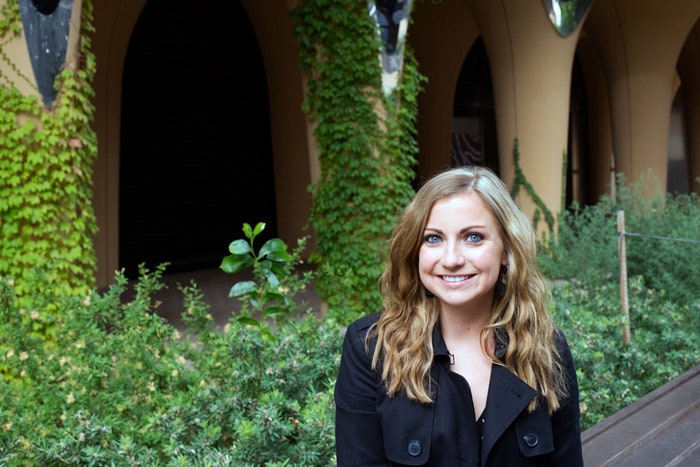
Master of Global Media Communication graduate Jessica Esler came to the program after having worked in the Victorian Public Service – first as a policy graduate, and then in the professional communications space.
“I undertook my masters because I wanted to broaden my theoretical and practical understanding of modern media technologies and platforms, and their global political, economic and social impacts,” she explains. Working and studying concurrently, Jessica took on a senior communications role with AGL Energy in 2018.
Jessica is enthusiastic about the international focus of the program. “It’s been a pleasure to study with such a diverse range of students, particularly those who come from different academic and cultural backgrounds to me,” she says, “as they offer unique insights and perspectives on the issues of social media, surveillance, and national identity being discussed in class.”
Studying the Social Media and Change intensive subject at Fudan University, Shanghai was a highlight for Jessica. “It was a great way to study social media within a completely different context. This subject challenged many of our assumptions around how the Chinese government and citizenry are utilising new social media platforms and processes to influence social and political change in the modern era.”