major
Microbiology
Major structure
Overview
This major is available in the Bachelor of Biomedicine and the Bachelor of Science.
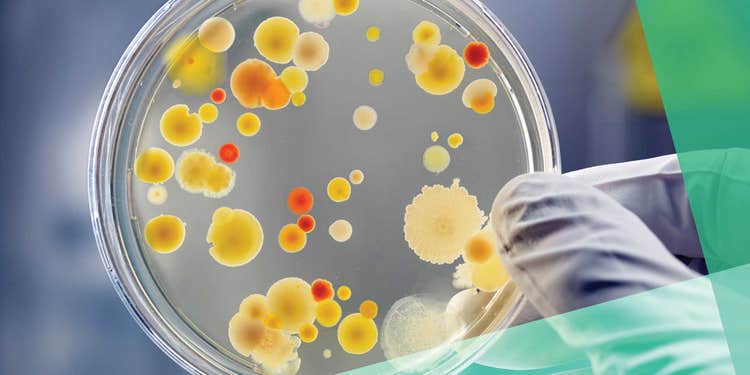
In the Microbiology major, you’ll investigate bacteria, viruses, and parasites and their impact on human health.
Major structure
Bachelor of Biomedicine
You will take eight core subjects (125 credit points) across your degree that will build an understanding of the structure and function of the body and consideration of the determinants of health and disease, including genetic and environmental influences (four in first year, two in second year and two in third year).
In your third year, you will complete 50 credit points (four subjects) of deep and specialised study in microbiology.
Throughout your degree you will also take elective and breadth (non-biomedicine) subjects.
Bachelor of Science
The Microbiology major is made up of seven subjects (87.5 credit points) taken in your second and third year. Each subject is worth 12.5 credit points. Level 2 subjects are usually taken in second year, and Level 3 subjects in third year.
To complete this major, you’ll need:
- 25 credit points of Level 2 major core
- 12.5 credit points of Level 2 major elective
- 37.5 credit points of Level 3 major core
- 12.5 credit points of Level 3 capstone
The rest of your degree will consist of a Level 1 science core subject, your choice of elective subjects in science, and breadth (non-science) subjects.
Further information
You can find detailed information about your major – including structure, subject availability, and participation requirements – in the Handbook.
You can also explore your study pathway and sample course plans through My Course Planner.
Sample course plan
View some sample course plans to help you select subjects that will meet the requirements for this major.
| Accordion | |
|---|---|
Year 1100 pts |
|
| Semester 1 · 50 pts | |
| Semester 2 · 50 pts |
|
| Accordion | |
|---|---|
Year 2100 pts |
|
| Semester 1 · 50 pts |
|
| Semester 2 · 50 pts |
|
| Accordion | |
|---|---|
Year 3100 pts |
|
| Semester 1 · 50 pts | |
| Semester 2 · 50 pts | |
| Accordion | |
|---|---|
Year 1100 pts |
|
| Semester 1 · 50 pts | |
| Semester 2 · 50 pts | |
| Accordion | |
|---|---|
Year 2100 pts |
|
| Semester 1 · 50 pts |
|
| Semester 2 · 50 pts |
|
| Accordion | |
|---|---|
Year 3100 pts |
|
| Semester 1 · 50 pts | |
| Semester 2 · 50 pts | |
| Accordion | |
|---|---|
Year 1100 pts |
|
| Semester 1 · 50 pts | |
| Semester 2 · 50 pts | |
| Accordion | |
|---|---|
Year 2100 pts |
|
| Semester 2 · 37.5 pts |
|
| Semester 1 · 62.5 pts |
|
| Accordion | |
|---|---|
Year 3100 pts |
|
| Semester 2 · 50 pts | |
| Semester 1 · 50 pts | |
Explore this major
Explore the subjects you could choose as part of this major.
Bachelor of Science subjects
| Accordion | |
|---|---|
| Principles of Microbiology & Immunology · 12.5 pts |
This subject introduces students to the excitingly diverse world of microbes and discusses the roles they play not only in causing infectious disease but also in both creating and maintaining life as we know it. Various types of microbes and their basic life processes are described, with the focus mainly on bacteria and viruses. Cell biology principles and roles of organelles in protein trafficking will be discussed. Bacterial genetics and metabolism are explored, with the emphasis on how these areas determine observed behaviours and activities. The components of the immune system are outlined and their interactions and functions described. A central part of this subject is outlining some of the strategies used by microbes to cause disease, and the counter strategies employed by the immune system to prevent disease. Other ways of controlling microbes, including antibiotics and vaccines are also discussed. The key roles played by microbes and the immune system in medical and biotechnological research is described. This subject provides students intending to specialize in the biological sciences with an understanding of the basic concepts in the disciplines of both Microbiology and Immunology. |
| Microbes, Infections and Responses · 12.5 pts |
This subject describes how microbes are an essential part of our environmental ecology and participate in unique interactions within their environmental niche. This subject also describes how microbes (bacteria, viruses, parasites) cause infections in humans, and how our immune system responds. The characteristics of some of the pathogens which cause respiratory, gastrointestinal, sexually transmissible and hospital acquired infections are discussed together with the body’s immune response to these pathogens, and the design of appropriate interventions, including vaccines and antimicrobials. The effects of both these infections and the interventions to control infectious diseases on communities and public health are also described so that the interaction between pathogen, host and environment can be illustrated. This is a fully integrated subject in which the lectures and the practical classes build on, and support, each other. The practical classes comprise a series of case studies which illustrate and revise material covered in the lecture, and aim to teach the safe and effective implementation of basic microbiological techniques. |
| Medical Microbiology: Bacteriology · 12.5 pts |
This subject describes how bacteria have evolved specialized structures and proteins that allow them to adapt and survive in a range of environments. In particular this subject will examine the contribution of processes such as protein secretion and gene regulation to bacterial survival during infection of humans (i.e. pathogenesis). From an understanding of the molecular basis of host-pathogen interactions, students will be able to understand the diverse mechanisms bacteria use to cause disease, and how infectious diseases are spread. A range of medically important bacteria will be discussed, with an emphasis on their ecology, pathogenesis and the pathobiology of the disease. The subject will also describe techniques and strategies such as mutant construction and molecular cloning that are used to dissect microbial function, and cover applied aspects of medical microbiology, such as the diagnosis of infections, the mechanisms of action of antimicrobial agents, as well as resistance to these agents. Students should be able to apply this knowledge to the determination of strategies for prevention, control and recognition of disease, including the design of vaccines and other therapeutics. |
| Medical Microbiology: Virology · 12.5 pts |
This subject describes how medically important viruses interact with their hosts to cause infection. The subject will cover the strategies that different groups of viruses employ to replicate in host cells, and their mechanisms for manipulating cellular biochemistry for their own ends. The different outcomes possible for both the virus and the host cell, including clearance, persistence, carcinogenesis and immunodeficiency will be discussed. Also covered will be how viruses may be transmitted and detected, and the pathogenic process. The host immune response to infection and the various mechanisms used by viruses to evade the host’s defences will also be explored. Chemotherapeutic and vaccine strategies to control viral infection, as well as the exploitation of viruses as vectors for vaccine and gene therapy applications, will also be examined. These topics will be further illustrated by discussing the features of a range of medically important viruses. |
| Medical Microbiology: Parasitology · 12.5 pts |
Parasites, and the infections they cause, are a major cause of global health and socio-economic burden. They cause substantial morbidity and mortality in humans and animals worldwide, and major losses to global food production. This subject focuses on medically-important parasites, how they interact with their hosts and cause disease, and how these infections impact on human health and populations globally. This subject takes a broad, multi-disciplinary approach to introduce students to the excitingly complex and diverse world of medically important parasites. Aspects of host-parasite interactions and disease pathogenesis (including immune evasion mechanisms and relevant host defences), as well as parasite life-cycles, transmission, diagnosis, prevention (including vaccine and drug development), treatment, control and impact on human health locally and globally will be covered. Topics will be addressed from the disciplinary perspectives of microbiology, immunology, biochemistry, cellular and molecular biology, genomics, physiology and epidemiology. Examples of medically-important protists (unicellular eukaryotes), helminths (worms) and arthropods (including insects) will be studied. This subject consists of lectures and active-learning sessions, including practicals. It is delivered by internationally renowned parasitologists and global health researchers. |
Capstone
| Accordion | |
|---|---|
| Techniques in Microbiology · 12.5 pts |
This capstone subject provides an:
Laboratory techniques covered include molecular methods and functional assays used for the identification and characterisation of microbial agents (including bacteria and viruses), such as polymerase chain reaction (PCR), flow cytometry, enzyme immunoassays, protein electrophoresis, western blotting, bioinformatics and immunofluorescence assays. Non-Laboratory sessions will be used for the introduction of practical topics, data analysis, critical discussion of scientific research publications, research ethics and integrity, as well as discussion of strategies used in constructing and presenting scientific reports, both oral and written. Upon completion of the subject students will have:
|
Students will complete one Elective
| Accordion | |
|---|---|
| Biochemistry and Molecular Biology · 12.5 pts |
This subject is an introduction to the field of Biochemistry and Molecular Biology, building on 1st year chemical principles relating molecular structure to biological function. The content includes a detailed introduction to the structure of biological building blocks (amino acids, nucleic acids, carbohydrates and lipids). The subject covers the structure and function of proteins, including the properties of enzymes, their regulation and kinetic behaviour. How nucleic acids replicate information, are maintained and repaired and serve as a template for the synthesis of RNAs and proteins (i.e. molecular biology) is addressed. The structure of lipids is examined to show their major biological roles, particularly as components of cell membranes. Metabolic pathways (glycolysis, gluconeogenesis, glycogen metabolism, TCA cycle and oxidative phosphorylation) will complete this core coverage of essential biochemistry. The subject is designed to stand alone, but it complements the laboratory experiences in the subject BCMB20005 “Techniques in Molecular Science”, Each of these level-2 subjects can be taken independently, concurrently or in either order. |
| Foundations of Genetics and Genomics · 12.5 pts |
This subject will describe the fundamental characteristics of a genome, its structure and how genetic information contained within the genome is expressed and transmitted. The subject will integrate the molecular basis of genetic variation with the principles of Mendelian, quantitative and population genetics to explain patterns of genetic variation. A core aspect of this subject will be the development of analytical skills associated with solving genetic-based problems and interpreting data from genetic experiments. |
Bachelor of Biomedicine subjects
| Accordion | |
|---|---|
| Medical Microbiology: Bacteriology · 12.5 pts |
This subject describes how bacteria have evolved specialized structures and proteins that allow them to adapt and survive in a range of environments. In particular this subject will examine the contribution of processes such as protein secretion and gene regulation to bacterial survival during infection of humans (i.e. pathogenesis). From an understanding of the molecular basis of host-pathogen interactions, students will be able to understand the diverse mechanisms bacteria use to cause disease, and how infectious diseases are spread. A range of medically important bacteria will be discussed, with an emphasis on their ecology, pathogenesis and the pathobiology of the disease. The subject will also describe techniques and strategies such as mutant construction and molecular cloning that are used to dissect microbial function, and cover applied aspects of medical microbiology, such as the diagnosis of infections, the mechanisms of action of antimicrobial agents, as well as resistance to these agents. Students should be able to apply this knowledge to the determination of strategies for prevention, control and recognition of disease, including the design of vaccines and other therapeutics. |
| Medical Microbiology: Virology · 12.5 pts |
This subject describes how medically important viruses interact with their hosts to cause infection. The subject will cover the strategies that different groups of viruses employ to replicate in host cells, and their mechanisms for manipulating cellular biochemistry for their own ends. The different outcomes possible for both the virus and the host cell, including clearance, persistence, carcinogenesis and immunodeficiency will be discussed. Also covered will be how viruses may be transmitted and detected, and the pathogenic process. The host immune response to infection and the various mechanisms used by viruses to evade the host’s defences will also be explored. Chemotherapeutic and vaccine strategies to control viral infection, as well as the exploitation of viruses as vectors for vaccine and gene therapy applications, will also be examined. These topics will be further illustrated by discussing the features of a range of medically important viruses. |
| Medical Microbiology: Parasitology · 12.5 pts |
Parasites, and the infections they cause, are a major cause of global health and socio-economic burden. They cause substantial morbidity and mortality in humans and animals worldwide, and major losses to global food production. This subject focuses on medically-important parasites, how they interact with their hosts and cause disease, and how these infections impact on human health and populations globally. This subject takes a broad, multi-disciplinary approach to introduce students to the excitingly complex and diverse world of medically important parasites. Aspects of host-parasite interactions and disease pathogenesis (including immune evasion mechanisms and relevant host defences), as well as parasite life-cycles, transmission, diagnosis, prevention (including vaccine and drug development), treatment, control and impact on human health locally and globally will be covered. Topics will be addressed from the disciplinary perspectives of microbiology, immunology, biochemistry, cellular and molecular biology, genomics, physiology and epidemiology. Examples of medically-important protists (unicellular eukaryotes), helminths (worms) and arthropods (including insects) will be studied. This subject consists of lectures and active-learning sessions, including practicals. It is delivered by internationally renowned parasitologists and global health researchers. |
Capstone
| Accordion | |
|---|---|
| Techniques in Microbiology · 12.5 pts |
This capstone subject provides an:
Laboratory techniques covered include molecular methods and functional assays used for the identification and characterisation of microbial agents (including bacteria and viruses), such as polymerase chain reaction (PCR), flow cytometry, enzyme immunoassays, protein electrophoresis, western blotting, bioinformatics and immunofluorescence assays. Non-Laboratory sessions will be used for the introduction of practical topics, data analysis, critical discussion of scientific research publications, research ethics and integrity, as well as discussion of strategies used in constructing and presenting scientific reports, both oral and written. Upon completion of the subject students will have:
|