Bachelor of Agriculture
Course code: B-AGR
March, July
Commonwealth Supported Places (CSPs) available
72.25 - Lowest selection rank 2026 (guide only)
Access Melbourne is available
March, July
AUD $53,052 (2026 indicative first year fee)
IELTS 6.5 (with no band less than 6.0)
Course structure
Overview
Honours is available for this course
Co-designed with industry, the Bachelor of Agriculture gives you a solid foundation in agricultural science and lets you specialise in what matters to you.
Course structure
24 subjects over three years (300 credit points total). Most students complete eight subjects (12.5 credit points each) per year of full-time study.
Study eight core subjects – from biology and natural environments to agricultural production – then choose major and elective subjects to shape your career.
Your first year
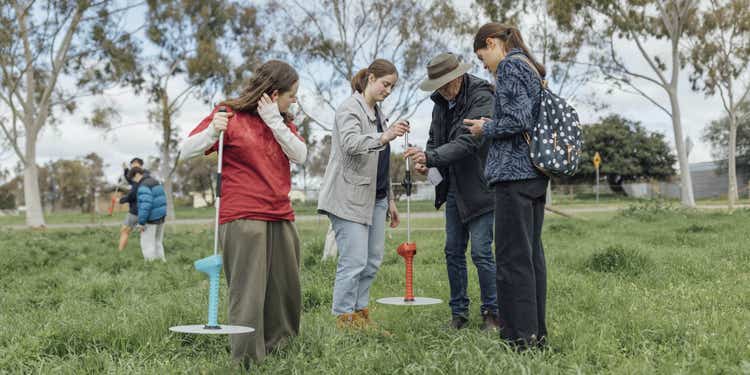
Learn the fundamentals: how we grow food, the challenges we face, and why Australian agriculture matters globally. You'll start with Agriculture Discovery Week, a unique program exclusive to Bachelor of Agriculture students.
Your second year
Pick a major: a sequence of subjects that defines your speciality. You can choose from Agricultural Economics, Plant and Soil Science, or Production Animal Science.
Your third year
Complete advanced subjects in your major while gaining real industry experience. In your capstone subject, you'll work in multidisciplinary teams to tackle large-scale agricultural challenges and present solutions to industry professionals.
Studying at Dookie
You can spend a semester of your degree at our dedicated agricultural campus in Dookie. Get hands-on farm experience, use cutting-edge technology, visit local businesses, and see how everything you've learned works in practice.
Helping you plan
We know that planning your degree can feel both exciting and daunting. We'll work with you throughout your studies to make sure you're on the right track. Keen to try it yourself? Use My Course Planner to explore your study options.
Profile
Scarlett Cuthbertson
"My time during my Bachelor of Agriculture was incredible as I learnt so many skills and amassed a great deal of knowledge regarding all facets of the Australian agricultural industry. My hands-on experience at the Dookie campus and on exchange at the University of Reading further bolstered my practical knowledge, specially the dairy industry and variances between international systems."

Sample course plan
View some sample course plans to help you select subjects that will meet the requirements for this bachelor.
This is a sample course plan only. Subjects offered may change from year to year. You will be advised of current subject offerings prior to subject selection and enrolment.
| Accordion | |
|---|---|
Year 1100 pts |
|
| Semester 1 · 50 pts | |
| Semester 2 · 50 pts | |
| Accordion | |
|---|---|
Year 2100 pts |
|
| Semester 1 (Parkville) · 50 pts | |
| Semester 2 (Parkville) · 50 pts | |
| Accordion | |
|---|---|
Alternate year 2100 pts |
|
| Semester 1 (Parkville) · 50 pts | |
| Semester 2 (Dookie) · 50 pts | |
| Accordion | |
|---|---|
Year 3100 pts |
|
| Semester 1 · 50 pts | |
| Semester 2 · 50 pts | |
Explore this course
Explore the subjects you could choose as part of this degree.
Making up one third of your subjects, a major is the subject area you’ll focus on during your undergraduate degree. In your first year you can focus on your major straight away or explore other subjects before deciding on what major you want to pursue. A major generally comprises eight subjects (100 points of study) but can comprise up to 10 subjects (125 points of study).
Explore the majors available in this degree below.
| Accordion | |
|---|---|
| Agricultural Economics |
This major will provide graduates with a depth and breadth of understanding of economics in the context of agricultural production systems. Students will have options to focus their agricultural economic direction through flexible subject options. Graduates of this major will be well equipped to analyse agricultural systems from an economic perspective and provide advice on management decision making. |
| Plant and Soil Science |
This major will provide graduates with a depth and breadth of understanding in plant and soil science in the context of agricultural production systems. Students of this major will study subjects in soil management, agronomy, plant health for growth and production and crop management. Students will also gain a detailed understanding of the drivers of plant industries and how management strategies can optimise yield and product quality. |
| Production Animal Science |
This major will provide graduates with a depth and breadth of understanding in production animal science in the context of agricultural systems. Students of this major will study subjects in animal biology, nutrition and physiology, health and welfare. Graduates of this major will also gain a detailed understanding of animal production industries, and how management strategies can optimise growth and product quality. |