Bachelor of Commerce
Course code: B-COM

February, July
Commonwealth Supported Places (CSPs) available
92.00 - Lowest selection rank 2026 (guide only)
Access Melbourne is available
March, July
AUD $52,360 - $59,052 (2026 indicative first year fee)
IELTS 6.5 (with no band less than 6.0)
Course structure
Overview
Honours is available for this course
The University of Melbourne offers a learning environment that stimulates, challenges and fulfils the potential of ambitious students from around the globe, leading to personal development, meaningful careers and profound contributions to society.
The Bachelor of Commerce is a flexible degree that builds skills and expertise while you explore your interests at the same time. This is a three-year degree in which you will complete 24 subjects (300 points of study in total). You will undertake 8 subjects (100 points of study) in each year of full-time study.
Commerce majors
Your major is your primary area of study. In your first year, you’ll have the chance to explore different disciplines through foundation subjects linked to each major (for Actuarial Studies, the foundation subject is strongly recommended but not compulsory).
Learn more about each major:
*For professional accreditation in Accounting or Actuarial Studies, you should begin the required first-year subject sequence straight away. For other majors, the Level 1 pre-major subject can be taken later, provided it’s completed before you move into Level 2.
Students can complete a double major by combining any two majors listed above within the standard 300 credit points of the degree (no extra time required). Note that for students seeking accreditation in the Actuarial Studies major, a double major is only possible when combined with Business Analytics, Economics or Finance.
Specialisations
From 2026, you can deepen your knowledge by focusing 25 credit points of your level 3 elective study toward a specialisation within your major. The following 10 specialisations will be available to these respective majors:
- Ethics & Sustainability (open to all majors)
- Econometrics (Economics)
- Economic Policy (Economics)
- Computational Finance (Finance)
- Valuation & Modelling (Finance)
- Human Resource Management (Management)
- Supply Chain Management (Management)
- Digital Marketing (Marketing)
- Strategic Marketing (Marketing)
- Actuarial Risk Management (Actuarial Studies)
First-year foundation experience
In your first year, you’ll complete at least four subjects from a curated foundation pool that introduces every commerce discipline and tackles real-world business problems. You’ll work in teams, analyse case studies and build core university skills while exploring how commerce can create positive economic, social and environmental impact. A co-curricular transition program runs alongside the subjects to help you connect with classmates and plan your study pathway.
Breadth subjects
The Melbourne curriculum allows you to incorporate breadth subjects into your degree. This gives you the chance to explore subjects or disciplines outside of commerce.
Use breadth to explore creative interests or topics you have always been curious about; or complement your major and career development with a language, communication skills or technological expertise.
If you have a professional graduate program in mind, such as the Juris Doctor (Law) or Master of Engineering, you can use your breadth subjects to develop your knowledge and meet prerequisites from day one. Breadth subjects can give you the flexibility to qualify for graduate studies or explore interests in a field that’s very different from your major.
Honours
The Bachelor of Commerce (Honours) offers a challenging and rewarding fourth year of specialised study in Accounting, Actuarial Studies, Economics, or Finance. This program provides in-depth knowledge, enhances research and analytical skills, and boosts your employability. Graduates are highly sought after in the corporate sector or can advance to Masters or PhD programs, making Honours an invaluable addition to your resume.
Concurrent Diploma (Domestic students only)
Complete a diploma alongside your undergraduate degree to broaden your studies and enhance your employability. Concurrent Diplomas are offered in Computing, Mathematical Sciences, Music or select languages. Equivalent to a major from a different faculty (100 points of study) they add a year to the usual full-time study load, but with approval can be completed within 3.5 years with cross-crediting (of up to 50 points) and/or overloading.
Profile
Michael Tirtana
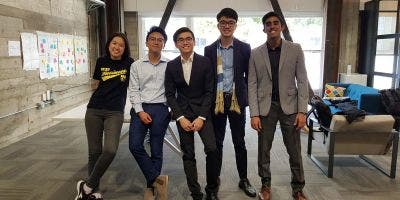
Bachelor of Commerce (Economics and Finance) student Michael Tirtana travelled to San Francisco in the USA, as part of Commerce’s Global Management Consulting subject. He worked at IBM Cloud Garage, in January 2018.
“I wanted to take a subject that allowed me to put into practice the theories I have learnt over the years; this is what Global Management Consulting offered. Having had no prior working experience, the opportunity to be a student consultant in IBM felt like the right step."
Learn more about Michael's experience in the Bachelor of Commerce.
Sample course plan
View some sample course plans to help you select subjects that will meet the requirements for this bachelor.
300 credit points
Year 1
100 pts
- foundation – 12.5 pts
- foundation – 12.5 pts
- elective – 12.5 pts
- breadth – 12.5 pts
Year 2
100 pts
- major – 12.5 pts
- Quantitative Methods 2 – compulsory – ECON20003 – 12.5 pts
- elective – 12.5 pts
- breadth – 12.5 pts
- elective – 12.5 pts
- breadth – 12.5 pts
- elective – 12.5 pts
- major – 12.5 pts
Year 3
100 pts
- major – 12.5 pts
- major – 12.5 pts
- elective – 12.5 pts
- breadth – 12.5 pts
- capstone – 12.5 pts
- elective – 12.5 pts
- breadth – 12.5 pts
- elective – 12.5 pts
Explore this course
Explore the subjects you could choose as part of this degree.
Making up one third of your subjects, a major is the subject area you’ll focus on during your undergraduate degree. In your first year you can focus on your major straight away or explore other subjects before deciding on what major you want to pursue. A major generally comprises eight subjects (100 points of study) but can comprise up to 10 subjects (125 points of study).
Explore the majors available in this degree below.
| Accordion | |
|---|---|
| Accounting |
Accounting is the ‘language of business’, informing management decision-making within an organisation and the allocation of resources between organisations. It provides the tools to measure and assess firm performance and valuation. Professional accountants operate in an increasingly complex and sophisticated field and are valued in every industry. Accountants act as strategic advisers and business partners and must, therefore, understand business issues and processes and have the skills necessary for sound decision-making. The study of Accounting leads to a career path with many diverse possibilities – you can work in a variety of roles, in any sector, in countries across the globe. The Accounting major offers a direct path to becoming a qualified accountant. You'll learn about the financial structure of organisations, and how to produce and analyse financial information. You'll also develop knowledge of business strategy, issues and processes, along with the skills for sound decision making. Membership requirements to Professional Associations vary but will usually require you to have completed certain subjects in the Bachelor of Commerce, such as BLAW10001 Principles of Business Law, BLAW20001 Corporate Law, and BLAW30002 Taxation Law I. Full membership requirements may include relevant work experience and/or further study. |
| Actuarial Studies |
Actuaries employ a range of cutting-edge quantitative methods to assess and manage financial risks. Actuaries work in general insurance, life insurance, reinsurance, health insurance, superannuation, banking and financial services, consulting, government and with data scientists on a range of commercial problems facing organisations. The actuary’s work is based on a multi-disciplinary background in mathematics, statistics, finance and economics. A major in Actuarial Studies will give you a firm grounding in the traditional actuarial skill set of mathematics, statistics, demography, finance and economics and you will also develop skills in data science. Specifically, you’ll learn from subjects covering actuarial techniques and life insurance modelling, through to the mathematics of finance and insurance risk models. Professional RecognitionThe Centre for Actuarial Studies is accredited by the Actuaries Institute, which is the professional actuarial body in Australia. This accreditation means that students who complete certain subjects at the University of Melbourne, and achieve a sufficiently high standard, will be recommended for exemption from the corresponding subjects of the Actuaries Institute. Further details are available in the Students’ Guide on the Centre for Actuarial Studies website. The Faculty of Business and Economics is also designated as a Center of Actuarial Excellence by the Society of Actuaries in the United States of America. |
| Business Analytics |
The of use of increasingly diverse forms and large amounts of data in business intelligence and decision making has been increasingly integral to achieving and sustaining competitive advantage. Decision makers in business organisations, public sector organisations and policy makers are reliant on business analyst professionals who can identify useful data for generating new insights, structuring and interpreting the data, and communicating their analysis to nontechnical users and decision makers. Graduates with a major in Business Analytics have varied employment opportunities in both the public and private sector in a rapidly expanding set of professional applications. Data analytics working across different industry and organisational settings combine knowledge and skills from core business and economics disciplines, such as accounting, actuarial studies, economics, finance, human resource management, operations and supply chain management, and marketing, with techniques that rely on computational science, including algorithms, natural language programming, artificial intelligence, and quantum computing. Competing the major in Business Analytics, students will learn about core techniques deployed to identify, evaluation and resolution of complex business and economics problems. This major offers a strong complement to other existing majors within the Bachelor of Commerce, which provide the theories, models and techniques relevant to particular professional fields. |
| Economics |
Economists combine data and models to understand economic decision-making by various actors, including households, businesses, and governments, and predict how their decisions affect particular communities, industries, and sectors, as well as the economy and society. For instance, economists examine how individuals choose what to buy and how to spend their time, how companies set prices and earn profits, how taxes and interest rates are determined, and how countries engage in pressing societal challenges, such as inequality, innovation, international trade, and climate change. |
| Finance |
The Finance major is the study of money management. Finance professionals manage assets to create wealth for investors or companies. When dealing with investments, it's about considering the time between investment and future payoff - and the risks attached to these future payoffs. The finance discipline examines how these organisations raise funds to implement investment strategies, and how they allocate these funds to a variety of investment opportunities. This involves the application of economic analysis, accounting concepts and quantitative methods to solve financial problems, assess risks and make financial decisions. The discipline of finance covers three key areas:
These core subject areas may be supplemented with elective subjects in financial planning (personal finance), banking, international finance, entrepreneurial finance, ethics in finance and FinTech. Studying finance will prepare you for a career in the finance sector and as finance specialists in industry and government. Professional RecognitionThe University of Melbourne is a Program Partner of the CFA Institute, which awards the Chartered Financial Analyst (CFA) designation. Recognition as a CFA Program Partner means the Commerce Finance major is tied to professional practice and helps prepare you for the CFA exams. More information can be found on the Finance Accreditation page. |
| Management |
Effective managers lead businesses and organisations in achieving their goals. Studying management equips you with the leadership, analytical, planning and decision-making skills used in managing people and operations. In completing the major in Management, you will learn about your own personal effectiveness, how to work in teams, and how to solve real organisational problems, as well as the necessary tools for effective decision-making. You will understand the principles of making good business decisions, managing business operations, dealing with change, thinking globally, and acting ethically. In this major, you can choose subjects from specialist areas including business management, human resource management, international business and operations management. Career options are many and varied, including positions in management consulting, senior business leadership positions, equity and diversity officer, human resources manager, project manager, change management specialist, recruitment consultant, manager of business process improvement, research and development management, and many others. The Management major is also a valuable complement to studies in another areas, such as accounting or finance. |
| Marketing |
Marketing is essential to the health of any profitable enterprise, whether in the public or private sector. Marketing allows you to manage a brand and contribute to an organisation’s business strategy. A major in marketing will provide you with the tools and skills you need to build relationships with your audience. You will learn how to research and evaluate market opportunities. You will learn how to create compelling value propositions for customers. We will teach you how to design products and communication campaigns that will engage and excite customers. And you will see the importance of putting the customer at the centre of everything the organisation does. Teaching topics span the breadth of marketing education including advertising, product and brand management, strategic marketing, market research, service and relationship marketing, global marketing, digital marketing and consumer behaviour. Marketing studies offer vital skills and knowledge to underpin your career growth, whatever path you choose to take. |
You have the option to study an extra qualification alongside your degree. If you’re a passionate musician, programmer or mathematician, or have an interest in languages, you can enrol in one of four concurrent diplomas alongside your bachelors degree - computing, languages, mathematics or music. A concurrent diploma consists of 100 credit points and usually involves an additional year of full-time study.
Explore our concurrent diplomas below.
| Accordion | |
|---|---|
| Diploma in Music |
The Diploma in Music provides students with the opportunity to undertake a tailored sequence of music study and gain a music qualification while completing an undergraduate degree in another field at The University of Melbourne. It is available to students enrolled in an undergraduate degree other than the Bachelor of Music and the Bachelor of Fine Arts. It is studied concurrently with the bachelor degree. Diploma in Music students study for a music qualification alongside Bachelor of Music students, giving the opportunity to build valuable friendships and networks in a challenging musical environment. A range of study options is available across all areas of specialisation within the Melbourne Conservatorium of Music, including practical music, ensemble music performance, aural studies, composition, improvisation, music history and theory. Students are encouraged to follow their own areas of interest, constructing a bespoke program of study from the range of elective choices available. The Diploma may only be awarded on the completion of the concurrent degree course. This means that graduation from the Diploma will only occur at the same time as graduation from the concurrent course. A concurrent diploma must be undertaken at the same time as your substantive degree (e.g. Bachelor of Arts) and is considered to be a combined course for the purposes of the Student Assistance (Education Institutions and Courses) Determination 2019. More information on concurrent diplomas is found here. |
| Diploma in Languages |
Concurrent Diplomas are not available to students studying on a student visa, or student visa applicants. The Diploma in Languages (D-Lang) is a concurrent program and provides students with the opportunity to undertake language study while completing an undergraduate, graduate coursework or RHD program at the University of Melbourne. There are 13 languages on offer in the Diploma in Languages, and students will progress through a sequence of eight subjects in their chosen language. Students are able to commence the program at different entry points pending on proficiency, as outlined in the specific language's specialisation page. The Diploma in Languages will usually add one year duration to your studies. Undergraduate students have the option to fast track and may complete both programs in three and a half or three years. The duration for graduate coursework students varies on their program, advice and permission for graduates should be sought from their home Faculty prior to application. The Diploma may only be awarded on the completion of both programs. Domestic students enrolled in a Graduate Coursework or Research Higher Degree course will have access to Commonwealth supported places. International Graduate Coursework and RHD students will attract International undergraduate fees for the Diploma in Languages. A concurrent diploma must be undertaken at the same time as your substantive degree (e.g. Bachelor of Arts) and is considered to be a combined course for the purposes of the Student Assistance (Education Institutions and Courses) Determination 2019. More information on concurrent diplomas is found here. |
| Diploma in Computing |
The Diploma in Computing will provide students in almost all areas of study with the option of complementing their principal undergraduate major with a program in the IT area, designed to give them familiarity with a range of data manipulation and presentation techniques. The delivery format via a concurrent diploma is designed to build on and extend students’ main study, with the expectation that students will contribute problems and challenges from their main study area to their Diploma subjects. A concurrent diploma must be undertaken at the same time as your substantive degree (e.g. Bachelor of Arts) and is considered to be a combined course for the purposes of the Student Assistance (Education Institutions and Courses) Determination 2019. More information on concurrent diplomas is found here. |
| Diploma in Mathematical Sciences |
The Diploma in Mathematical Sciences is a 100-point diploma, normally taken concurrently with an undergraduate degree. The Diploma in Mathematical Sciences is a great way to use and develop your mathematical skills and complement your undergraduate studies. The high-level numerical and modelling skills you will gain can be applied across almost every area of employment and are always in demand. This diploma is studied concurrently on a part-time basis with a bachelor degree. Within the Diploma, students will complete the requirements of the Mathematics and Statistics major from the Bachelor of Science. The Diploma consists of 1 year EFTSL of study completed concurrently with an undergraduate degree usually over 3-4 years. A concurrent diploma must be undertaken at the same time as your substantive degree (e.g. Bachelor of Arts) and is considered to be a combined course for the purposes of the Student Assistance (Education Institutions and Courses) Determination 2019. More information on concurrent diplomas is found here. Please note: The Diploma in Mathematical Sciences is not available to students enrolled in the Bachelor of Science who are taking the Data Science, Mathematics and Statistics or Mathematical Physics majors. |
Breadth is a key feature of the Melbourne curriculum that allows you to study a wide range of subjects. In addition to the subjects offered in your core area of study, you can also take subjects from other disciplines. Explore beyond your study area to build an interdisciplinary skillset and develop additional critical thinking, problem-solving, communication and leadership skills.
Explore the range of breadth subjects below.
| Accordion | |
|---|---|
| Accelerated Mathematics |
Accelerated Level 1 subjects for students with a strong mathematics background, plus a choice of Level 2 subjects to introduce students to topics such as chaos, abstract algebra or probability. |
| Acting for Stage and Screen |
This Breadth Track progressively develops knowledge and skill for acting on stage and in film and TV. |
| AI and the Law |
Artificial Intelligence (AI) is predicted to play an increasingly integral role in almost all aspects of our lives, including in fields of policing, public administration, environmental protection, education, medicine, finance and law. This track provides students with the skills necessary to deal with the technical, ethical and legal challenges that arise in designing, governing and regulating AI that is fair, safe and beneficial to society. This specialist track builds on the work of the Centre for Artificial Intelligence and Digital Ethics (CAIDE), a cross disciplinary research centre at the University of Melbourne bringing together academics researching all aspects of AI ethics and regulation, including from engineering, computer science, humanities, science and law. |
| Ancient Civilizations A |
This breadth track explores issues related to ancient civilizations. |
| Ancient Civilizations B |
This breadth track explores issues related to ancient civilisations, with a focus on mythology. |
| Ancient Egypt and the Near East |
This breadth track explores issues related to ancient civilizations, with a focus on Ancient Egypt and the Near East. |
| Ancient Greece Studies |
This breadth track explores issues related to ancient civilizations, with a focus on Ancient Greece. |
| Ancient Greek |
This breadth track progressively develops knowledge and skills in Ancient Greek. |
| Anthropology - ritual, meaning and performance |
This breadth track explores issues related to ritual, meaning and performance from an anthropological perspective. |
| Anthropology - self and society |
This breadth track explores issues related to self and society. |
| Anthropology - structures, identity and power |
This breadth track explores issues related to structures, identity and power. |
| Arabic - Entry Point 1 |
This breadth track progressively develops knowledge and skills in the Arabic language for beginners. |
| Archaeology |
This breadth track progressively develops knowledge and skills in Archaeology. |
| Architectural History |
This breadth track surveys the history of architecture from the beginnings of shelter to the present day. |
| Architecture |
This breadth track introduces students to the basics of architectural design and history and provide students with the prerequisite subjects to apply for entry into the 300-point Master of Architecture. |
| Arts Practice and Engagement |
This breadth track explores drama/theatre/music and visual arts making and presenting in relation to a diverse range of learning settings from the perspective of the artist and community. |
| Australian flora |
This breadth track progressively develops knowledge and skills in Australian flora,and in the diversity of the plant kingdom. It provides a general approach to the different biomes of Australia and the adaptive biology of the plants and animals inhabiting those biomes, and to the different floristic bioregions of Victoria and their ecology. Plant Biodiversity introduces the structure, biology and evolution of the major groups of land plants, with examples from the Australian flora. |
| Australian Wildlife |
This sequence provides students with a comprehensive overview of Australia's native wildlife, and the evolution, ecology and management of this remarkable group of animals. |
| Biotechnology |
This track will introduce students to the principles of biotechnology, which is the use and manipulation of living organisms, or substances obtained from these organisms, to make products of value to humanity. |
| Cell and Developmental Biology |
This track will develop a student's general interest in biology and focus particularly on how cells function, particularly in the context of multicellular organisms. With emphasis on current research methodologies, it provides insights into how cells 'translate' the genetic code to produce and transport proteins to specific sites within or outside the cell to control processes required for cell survival, proliferation, movement and growth and how these processes controlled and orchestrated during the remarkable progression of a fertilised egg into an independent organism. |
| Chemical Engineering |
This breadth track provides students with an introduction to the foundations of Chemical Engineering. |
| Chinese - Entry Point 1 |
This breadth track progressively develops knowledge and skills in Chinese language for beginners. |
| Chinese - Entry Point 3 |
This breadth track progressively develops knowledge and skills in Chinese language for students who have taken Chinese at VCE level. |
| Chinese Studies |
This breadth track explores issues related to Chinese Studies. |
| Choral Performance |
This breadth track explores the diversity of choral music and progressively develops knowledge and skills in choral performance. |
| Climate and Water |
Climate and Water integrates the major challenges being faced both nationally and internationally integrating knowledge across disciplines to provide strategies for developing appropriate responses to these challenges. |
| Climate Change |
This breadth track explores issues related to climate change from a multidisciplinary perspective. |
| Construction |
This breadth track for BCom students qualifies students to apply for a 200-point (two-year) Master of Construction Management. Note that BCom students are exempt from the normal prerequisite for Residential Construction and Structures. |
| Creative Writing |
This breadth track progressively develops knowledge and skills in Creative Writing. |
| Creativity, the Arts and Young People |
Explore artistic play, expression and performance in the growth and creative development of children and young people through active and experimental learning in diverse settings. |
| Criminology |
This breadth track progressively develops knowledge of crime and crime control and helps develop analytical skills in criminology. |
| Cultural Astronomy | View detailed information in the Handbook |
| Dancing the Dance |
This Breadth track progressively develops knowledge and skills in dance styles and approaches to physical training whilst exploring how movement, languages and choreographic approaches can be used to express ideas and realise performance. |
| Deafness and Communication |
This breadth track explores issues related to Deafness and communication, from a wide range of perspectives including social, cultural, and technological. There is also a focus on visual communication and Auslan, the language of the Australian signing Deaf community. |
| Development Studies |
This breadth track explores issues related to development studies. |
| Drawing, Painting and Observation |
This breadth track progressively develops skills in drawing and painting. Students learn practical hand-on techniques and processes whilst also gaining a greater understanding of how art communicates ideas. |
| Earth's Structure |
This breadth track explores the Earth's internal composition, structure and evolution over geological time. |
| Ecology |
This breadth track develops an understanding of how we use the principles of ecological science for the conservation and management of natural and human-made ecosystems. |
| Ecology, Evolution and Humanity |
This sequence explores the unique place of humans in the earth's evolutionary history, and the diverse ways in which evolutionary process continue to affect contemporary human society. |
| Electrical Engineering |
This breadth track provides students with an introduction to the foundations of Electrical Engineering. |
| Engineering and Environments |
This track gives students an insight into some fundamental principles of engineering and how engineering interacts with the social and natural environmental settings where water and soil are fundamental resources for human development. |
| English |
This breadth track explores issues related to English literature. |
| Experiencing Indigenous Cultural and Creative Practices |
This breadth track engages with Aboriginal and Torres Strait Islander creative and cultural practices, with a focus on connections to Country and place, while developing cultural literacies, critical thinking, and deep listening skills. Each subject focuses on Indigenous artistic practices through which students will investigate knowledges, technologies and architectures, place and ways of knowing, being and doing. |
| Feeding the World's Population |
Food is essential to human life on Earth, and is inextricably bound up in our biology, culture and beliefs. Learn about the current and future challenges of global food production, supply, and consumption and discover how food production in Australia is changing to meet the environment and society's changing needs. |
| Forests and Fire |
Forests and fire introduces students to forests from social, historical, environmental and economic perspectives and provides an understanding of the effects of fuel, weather and climate on the nature and periodicity of bushfires, as well as the social and economic impact of bushfires. |
| French - Entry Point 1 |
This breadth track progressively develops knowledge and skills in French language for beginners. |
| French - Entry Point 3 |
This breadth track progressively develops knowledge and skills in French language for students who have taken French at VCE level. |
| French - Entry Point 5 |
This breadth track progressively develops knowledge and skills in French language for students who are at an Advanced Level. |
| French - Entry Point 7 |
This breadth track progressively develops knowledge and skills in French language for students who are at a super advanced Level. |
| General Genetics |
This breadth track provides a background in the principles of genetics and inheritance with the opportunity to extend these studies in areas of molecular or evolutionary genetics. |
| Genetics and Society |
Offering a sufficient background to appreciate the relevance of genetics to current societal issues. |
| Geology in the field |
This breadth track will provide students with a broad introduction to geological processes and equip them with important skills in how to map out and read the geological record. Students will apply and improve these skills by undertaking fieldwork. |
| German - Entry Point 1 |
This breadth track progressively develops knowledge and skills in German language for beginners. |
| German - Entry Point 3 |
This breadth track progressively develops knowledge and skills in German language for students who have taken German at VCE level. |
| German Entry Point 5 |
This breadth track progressively develops knowledge and skills in German language for students who have taken German at VCE level. |
| German - Entry Point 7 |
This breadth track progressively develops knowledge and skills in German language for students who are native speakers or near-native speakers of German, or for candidates who have spent a number of years in a German speaking country. |
| Government, Public Policy and Management |
This breadth track explores issues related to development, implementation and analysis of public policy and management. |
| Greening Urban Landscapes |
This breadth track introduces students to a range of issues associated with greening urban landscapes and helps develop knowledge and skills for selecting and managing plants for urban landscapes. |
| Human Genetics |
This breadth track provide a background in genetics sufficient to appreciate the significance of recent advances in human genetics research. |
| Indonesian - Entry Point 1 |
This breadth track progressively develops knowledge and skills in Indonesian language for beginners. |
| Indonesian - Entry Point 3 |
This breadth track progressively develops knowledge and skills in Indonesian language for students who have taken Indonesian at VCE level. |
| Introduction to Construction |
This breadth track provides an introduction to the construction industry at a residential level covering basic structures, materials, construction methods and management of the construction process. |
| Islamic Studies |
This breadth track explores issues related to Islamic Studies. |
| Italian - Entry Point 1 |
This breadth track progressively develops knowledge and skills in Italian language for beginners. |
| Italian - Entry Point 3 |
This breadth track progressively develops knowledge and skills in Italian language for students who have taken Italian to Year 10/11 Italian or equivalent. |
| Italian - Entry Point 5 |
This breadth track progressively develops knowledge and skills in Advanced Italian language. |
| Japanese - Entry Point 1 |
This breadth track progressively develops knowledge and skills in Japanese language for beginners. |
| Japanese - Entry Point 3 |
This breadth track progressively develops knowledge and skills in Japanese language for beginners. |
| Knowing and Learning |
Explore the nature of knowledge and how we learn. |
| Korean - Entry Point 1 |
This breadth track progressively develops knowledge and skills in Korean language. |
| Korean - Entry Point 3 |
This breadth track develops knowledge and skills in Korean language and broadens understanding of Korea. |
| Landscape Architecture |
This breadth track provides students with an introduction to the Landscape architecture design. |
| Law - Business and Taxation Law |
This breadth track progressively develops knowledge and skills in commercial and taxation law. |
| Law - Business Law |
This breadth track progressively develops knowledge and skills in commercial, competition, and consumer law. |
| Law - Media and Intellectual Property Law |
This breadth track progressively develops knowledge and skills in media and intellectual property law. |
| Leading Community Sport and Recreation |
This track examines the educational significance of sport and physical activity, and provides students with the knowledge and skills required to lead physical activity in their community. |
| Linguistics: English Language Studies |
This breadth track progressively develops knowledge and linguistic skills in the structure of English and English language studies. |
| Linguistics: Language in its social and cultural context |
This breadth track explores issues relating to language in its social and cultural context, both within a single cultural context, and across cultural boundaries. |
| Linguistics: Language Structure and Analysis |
This breadth track progressively develops knowledge and skills in linguistics and the analysis of language structure, drawing on data from the full range of the world's languages. |
| Living in Australia's Hazardous Ecosystems |
Living in Australia's Hazardous Ecosystems looks at the systems that shape the natural world, including the evolution of the planet Earth, our climate and global weather and the formation and processes of our present landscapes and associated ecosystems. Students will gain an understanding of the increasing trend to urbanisation and larger cities as a contributor to the rising toll of disaster losses globally. |
| Living with Animals |
Investigates human-animal relationships interactions, where they originated, domestication, and where they are now, examining in detail key relationships between humans and animals. |
| Making Movies |
This breadth track progressively develops knowledge and skills in film making, exploring the practicalities behind film and television writing and production. |
| Marine Life |
This breadth track provides an introduction to marine organisms and their environment, and the methodologies and techniques used by scientists to explore the undersea realm. |
| Mathematics and Statistics |
This breadth track progressively develops knowledge and skills in mathematics and statistics. It commences with the standard first year package for students with VCE Specialist mathematics or equivalent and progresses to a choice of Level 2 subjects to introduce students to the fields of pure mathematics, applied mathematics or probability. |
| Mathematics for Economics |
This track progressively develops knowledge and skills in mathematics for economics and satisfies the quantitative requirements for the Bachelor of Commerce. |
| Mechanical Engineering |
This breadth track provides students with an introduction to the foundations of Mechanical Engineering. |
| Microbiology and immunology |
This breadth track progressively develops knowledge and skills in microbiology and immunology. |
| Middle East and Islam |
This breadth track progressively develops knowledge and skills in history, with a focus on the Middle East and Islam. It covers the both early and modern history of the Middle East and North Africa, and of Muslim countries in South East Asia. |
| Music, Mind and Wellbeing |
This breadth track explores issues related to music, mind and wellbeing, including development of musical skills at different life stages, the relationship between music and the brain, as well as music and the body and examination of psychological, sociological and scientific research related to performing and creating music. |
| Music Outside the Western Tradition |
This breadth track explores music of non-Western cultures and societies and the people and social processes involved in music-making. |
| Music Theatre: A Practice Led Study |
This breadth track includes practice led critical studies in music theatre, giving students an opportunity to learn by doing, whilst developing critical thinking and listening skills. In each subject, practical, group singing tutorials are complemented by an engaging lecture series to give students an understanding of what they are embodying when performing some of the most significant and well-known material from the music theatre canon. |
| Natural systems and our designed world |
This breadth track explores the relationship of our cities and towns and the natural environment which underpins our society. |
| Non-Western Music Performance |
This breadth track progressively develops knowledge and skills in non-western music performance, culture and social contexts from around the world. |
| People and Environment |
This breadth track introduces students to different ways of thinking about human-environment relationships and provides frameworks relevant to considering human dimensions of environmental policy and management. |
| Politics and International Studies |
This breadth track progressively develops knowledge and skills in politics and international studies. |
| Popular Music |
This breadth track explores the history, culture and social context of music across a range of popular music styles. |
| Positive individuals, organisations and communities |
This breadth track explores issues related to positive psychology, with a focus on the relationship between well-being, pro-social behaviour and peak performance at the individual, group and community levels. |
| Printmaking, Screen-printing and Animation |
This Breadth track introduces students to printmaking, screen-printing and animation as art making mediums. Learn technical process and image making skills to develop your own art works. |
| Property |
This breadth track for students qualifies students to apply for a 200-point (two-year) Master of Property. |
| Roman Studies |
The Roman Studies breadth track surveys a thousand years of Roman political, social and cultural history (500 BCE - 500 CE). Ancient Rome's highly advanced society represents one of the first of the multicultural civilisations of the pre-industrial era and its study therefore offers many timeless insights into our own increasingly cosmopolitan world. |
| Russian - Entry Point 1 |
This breadth track progressively develops knowledge and skills in Russian language for beginners. |
| Sociology |
This breadth track progressively develops knowledge and skills in sociology. |
| Spanish - Entry Point 1 |
This breadth track progressively develops knowledge and skills in Spanish language for beginners. |
| Spanish - Entry Point 3 |
This breadth track progressively develops knowledge and skills in Spanish language for students who have taken Spanish at VCE level. |
| Spanish - Entry Point 5 |
This breadth track progressively develops knowledge and skills in Advanced Spanish language. |
| Studies in Music Composition and Music Language |
This breadth track develops theoretical knowledge and applied skills in music language and compositional craft. |
| Studies in Western Music |
This breadth track introduces students to fundamental musical concepts including rhythm, melody, harmony, timbre, texture, dynamics and form, and explores the history, culture and social context of western music from the middle ages to the 21st century. |
| Theatre Studies |
This breadth track progressively develops knowledge and skills in Theatre Studies. |
| Understanding Disasters, Their Management and Planning |
Introduces students to the major challenges currently facing humanity, their causes, potential impacts and strategies for mitigating or overcoming the risks they pose. |
| Urban Design and Planning |
This breadth track gives students a comprehensive foundation in urban design and planning, which focuses on the intersections between architecture, landscape architecture, planning and geography. |
| Wine and Food |
Explores the interaction between food and wine including the practice of drinking wine and matching food, and also raises some of the issues on the associated social, economic and health impacts on society. |
| Youth, Citizenship and Identity |
This breadth track explores issues of youth, citizenship and identity in education. |