Acknowledgement of Country
What you will learn
Gain contemporary skills and knowledge for your job now.
Delivering a meaningful Acknowledgement of Country means embracing the depth that belongs in the Country on which we stand.
This course centres Indigenous approaches to learning and creating to provide the grounding knowledge needed to appreciate our relationship with Place and, in turn, deliver a meaningful Acknowledgement of Country.
It’s valuable for anyone seeking to deepen their cultural understanding of Indigenous connection to place and Country and create culturally literate and informed frameworks for engaging with its peoples.
Deepen your cultural understanding and awareness
Be introduced to Indigenous knowledge frameworks and approaches to community, relationships, and interconnectedness. Explore cultural protocols and how to responsibly apply principles of cultural safety when working with Indigenous cultures or communities.
Encounter Indigenous technologies and creative practices
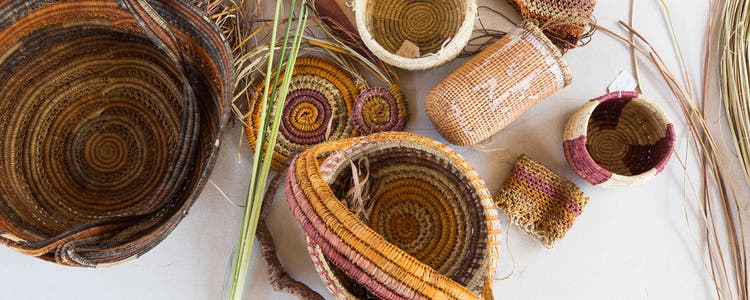
Learning in a way that uses hand and mind working together, you’ll engage in the practice of string-making, plus hear stories about what the practice represents and how it was learnt and reawakened. You'll also learn to identify materials and traditional Indigenous technologies from Country.
Write and present a meaningful Acknowledgement of Country
With this deeper understanding, you'll be guided to write and present an Acknowledgement of Country that is culturally safe, grounded in place, and appropriate to your own position in Australian life.
Who you will learn from
Learn from skilled academics and professional experts who will share invaluable knowledge you can use in your job.

Tiriki Onus
Yorta Yorta man, Pro Vice-Chancellor (Indigenous) and Head of Wilin Centre for Indigenous Arts and Cultural Development
Tiriki is a successful visual artist, curator, performance artist, opera singer and lecturer in Indigenous Arts and Culture at the Victorian College of the Arts. At the Wilin Centre, he fosters innovation in research, development, advocacy and presentation of Indigenous arts and cultural practice. In 2015 he was the inaugural Hutchinson Indigenous Fellow, and is Associate Dean, Indigenous in the Faculty of Fine Arts and Music and co-Director of the Research Unit for Indigenous Arts and Cultures.

Dr Megan McPherson
Senior Lecturer in Art and Intercultural Research
Megan is a settler artist, intercultural researcher and educator, and has taught at university level since 1996. Her focus is in printmaking, textiles and installations, and publishes in the areas of identity, social media use, Indigenous knowledges and pedagogies, and learning and teaching experiences in the creative arts. Megan is based at the Wilin Centre for Indigenous Art and Cultural Development, and the Research Unit for Indigenous Arts and Cultures in the Faculty of Fine Arts and Music.
More from this series
Take multiple courses to deepen your knowledge, or ask us about stacking toward a full degree.
The Wilin Online Cultural Literacies series
The Wilin Online Cultural Literacies series centres Indigenous approaches to learning and creating. Each micro-credential in the series features an act of material making designed to spark conversation, develop cultural literacies and foster respectful engagement with Indigenous knowledges.
Explore more from the Wilin Online Cultural Literacies series:
- Sharing of Indigenous Knowledges (Micro-credential)
- Indigenous Cultural and Creative IP (Micro-credential)
- Indigenous Community Research (Micro-credential)
Course details
Want to know more about micro-credentials? See our Frequently Asked Questions
This course is valuable for anyone seeking to deepen their cultural awareness and engage respectfully with Indigenous cultures and communities.
It's particularly beneficial for teachers and education professionals, arts workers and practitioners, community and cultural development workers, and corporate, business or government leaders.
There are no eligibility requirements.
By the end of this course, you will have gained a deeper awareness of Indigenous cultural protocols and creative practices. You will be able to:
- Reflect on diverse Indigenous creative and cultural practices and relationship to place
- Follow cultural protocols and identify materials and traditional Indigenous technologies from Country
- Respectfully and responsibly apply principles of cultural safety and respond to shared knowledges.
This micro-credential runs over six weeks.
Your total time commitment is 42 hours, which includes approximately:
- 9 hours guided learning
- 20 hours independent study
- 13 hours assessment activities.
Assessment:
- Acknowledgement of Country: a six-minute video presentation of an Acknowledgement of Country that follows Indigenous cultural protocols and diplomacies (50%)
- Making practice: a digital portfolio that presents both a creative outcome and a reflective text or video presentation. The making practice uses string as the primary material (50%).
Acknowledgement of Country can be taken as a stand-alone micro-credential or you can complement it with any other course in the Wilin Online Cultural Literacies series.
This series includes:
- Acknowledgement of Country
- Sharing of Indigenous Knowledges
- Indigenous Cultural and Creative IP
- Indigenous Community Research.