Assessment of Bushfire Exposure
Sorry you missed this course in 2026. Register your interest below for 2027: Gain the skills needed in bushfire assessment to apply for Bushfire Planning and Design Accreditation (BPAD) 1.
$1,190 AUD (Inc GST) (inc GST)
What you will learn
Gain contemporary skills and knowledge for your job now.
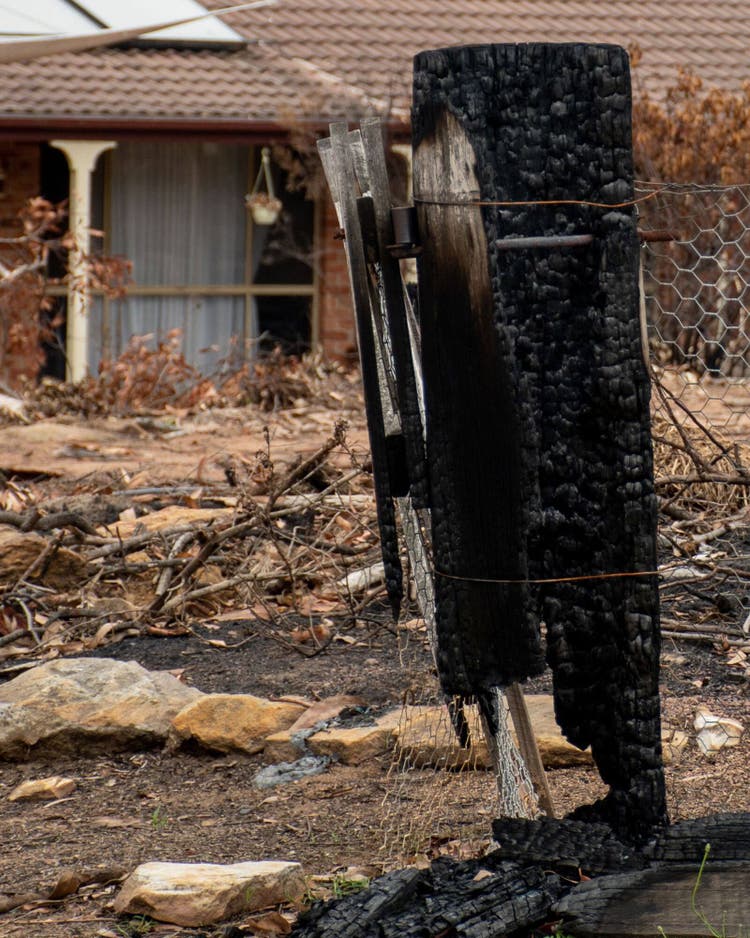
As our fire season becomes hotter and longer, it’s vital we build houses that can withstand these conditions.
This online micro-credential is ideal for professionals in bushfire planning, design or advisory services seeking the skills and knowledge to conduct bushfire assessments of residential properties and deliver building recommendations that contribute to creating more fire-resilient structures.
Learning in this course is mapped to Australian Standard AS3959:2018.
Perform topographic analyses and assess vegetation
Explore how to assess vegetation type using desktop research and perform topographic analysis using GIS. Learn to assess a site based on regional fire weather differences using online data.
Recommend alternate building approaches
Undertake desktop assessments of bushfire exposure. Develop alternate approaches for a building site based on vegetation and slope.
Conduct a property assessment
Learn to apply a basic property assessment using the Australian Standard AS3959:2018. You'll document a bushfire assessment of three residential properties and include the measurements and calculations used to determine property exposure.
Report on your findings and recommendations
Gain the knowledge needed to provide recommendations for a residential building based on the AS3959 assessment. Report on your findings in a clear concise manner and provide recommendations on alternative plans and the construction standards required.
Who you will learn from
Learn from skilled academics and professional experts who will share invaluable knowledge you can use in your job.

Professor Trent Penman
Professor in Bushfire Behaviour
Trent is a bushfire risk modeller interested in all aspects of bushfire management. Over the last ten years, his research has combined fire simulation with risk research methodologies such as Bayesian Networks. Trent is currently leading a project that will develop a fire regime simulation tool.

Dr Alex Filkov
Senior Fire Behaviour Research Fellow
Alex researches the fundamental aspects of ignition and combustion. He collaborates with researchers around the globe to understand the behaviour of fire and firebrands, the performance of materials, and the properties of fuels. He's currently using emerging technologies to uncover the mechanisms that drive dynamic behaviour in wildfires.
More from this series
Take multiple courses to deepen your knowledge or stack towards a full degree.
The Building in Bushfire Prone Lands series
This series explores how effective building design can make living in fire-prone landscapes more sustainable, and provides a comprehensive understanding of how buildings respond to bushfire in a planned environment.
Explore more from the Building in Bushfire Prone Lands series:
- Urban Design for Bushfire-Resilient Homes (Micro-credential)
Fees
For individuals
To take Assessment of Bushfire Exposure as a stand-alone micro-credential, you'll pay the normal course price.
$1,190 AUD (Inc GST) (inc GST)
Please contact Student Support to discuss discounts and payment options for University of Melbourne staff or alumni, or to pay by invoice.
For teams
If you have three or more team members who are keen to upskill with Assessment of Bushfire Exposure, get in touch to discuss pricing. For large groups, we can also deliver and contextualise this course exclusively for your organisation.
Pricing on request
Dates
Dates not right for you?
Register to receive updates
Course details
Want to know more about micro-credentials? See our Frequently Asked Questions
This micro-credential is valuable for conservation and land management professionals seeking an understanding of how domestic buildings respond to bushfire in a planned environment context.
It's applicable to a wide range of roles. You may be a natural areas technician, ranger, bushland officer, landscape supervisor, building designer, urban planner, architect, fire manager or developer working in compliance or in a government agency.
There are no eligibility requirements.
This micro-credential has been developed in close consultation with industry, so you can be confident your knowledge is aligned with industry needs and standards.
All knowledge and assessment tasks are mapped to Australian Standard AS3959-2018.
By the end of this course, you'll have a deeper understanding of how to assess properties and recommend changes to increase fire-resilience. You'll be able to:
- Apply a basic property assessment using the Australian Standard AS3959:2018
- Provide recommendations for a residential building based on the AS3959 assessment.
This course runs over five weeks, including one week of learner preparation, two weeks of delivery and two weeks for assessment.
Your total time commitment is approximately 42 hours, which includes:
- 10 hours guided learning
- 12 hours self-guided study
- 20 hours assessment tasks
Assessment:
- Document a bushfire assessment of three residential properties, including measurements and calculations used to determine the property exposure (70%).
- Provide recommendations on alternative plans and the construction standards required (30%).
- Once you've successfully completed this course, you will be awarded your Assessment of Bushfire Exposure Melbourne MicroCert. This digital certificate will warrant the achievement of knowledge, skills and capabilities outlined in the learning outcomes. It may also include artefacts (such as videos and written material) related to both experiential and work-integrated learning, including translatable assessment that is practical to your professional life. You can also share your Melbourne MicroCert digitally and via social media by adding it to your personal platforms, such as LinkedIn. See example certificate.