Nationhood and Self-determination
What you will learn
Negotiating treaties will advance self-determination and Indigenous nation rebuilding in Australia and, in turn, reshape the delivery of community services.
Designed and delivered by leading experts in First Nations history at the University of Melbourne, this micro-credential explores the practices and principles that underpin nation rebuilding and their relevance within treaty processes.
Valuable for anyone looking to broaden their understanding of Indigenous nationhood in Australia, this 6-week online course will benefit those people already involved in treaty negotiations, including professionals in the public, private and non-profit sectors, as well as First Nations people and organisations.
Explore how Indigenous nationhood and nation rebuilding shapes treaty negotiations
Gain a comprehensive overview of Indigenous nationhood and nation rebuilding, particularly as they relate to treaty. You'll compare and contrast Indigenous nation rebuilding in Australia with rebuilding programs in other settler colonies, including the United States.
Understand how the right to self-determination is recognised in international law
Explore how the concept of self-determination is applied in international law through the United Nations Declaration on the Rights of Indigenous Peoples (UNDRIP). You'll assess the legal aspects of self-determination and examine the UNDRIP's strengths and weaknesses in advocating for Indigenous peoples' right to self-determination.
Assess how self-determination will impact Indigenous community services
Critically analyse and reflect on the implications of self-determination for Indigenous community services. Explore how this sector will evolve, and enhance your understanding of the strengths, weaknesses, opportunities and threats of nation rebuilding in the Australian context.
Who you will learn from
Matt Campbell is a lecturer in treaty. His primary research interest is the political and epistemic aspects embedded within work where Indigenous and non-Indigenous people undertake action
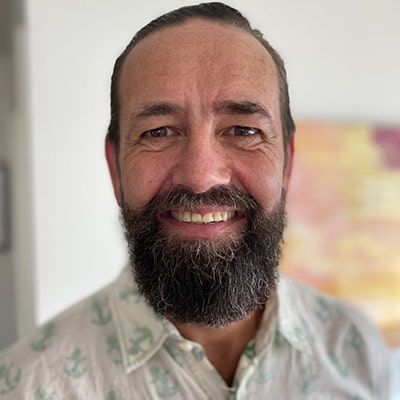
Matthew Campbell
Lecturer in Treaty, School of Culture and Communication
Matthew Campbell has a Bachelor of Landscape Architecture (RMIT), a Master of Applied Anthropology (ANU), and has recently completed his PhD at Charles Darwin University. His thesis draws on two decades of work in Northern Australia exploring the role that inquiry plays in situations where Indigenous and non- Indigenous people, working together, become aware that the goals or ends of that work are not necessarily shared. His primary research interest is in exploring the political and epistemic a
More from this series
Take multiple courses to deepen your knowledge or stack towards a full degree.
The Reshaping Australia’s First People-state relation series
This series covers the critical knowledge, skills and dispositions needed to develop meaningful relationships between First Nations and governments or organisations, with the goal of progressing and transforming treaty negotiations.
Explore more from the Reshaping Australia’s First People-state relation series:
- Treaties and Other Agreements (Micro-credential)
- Indigenous and Other Sovereignties (Micro-credential)
- Lawful Relations with Indigenous Peoples (Micro-credential)
- Recognition, Reconciliation, Refusal (Micro-credential)
- Stolen Generations, Truth-telling and Treaty (Micro-credential)
Course details
This micro-credential is suitable for anyone looking to deepen their understanding of Indigenous nation rebuilding and self-determination. It will be of particular value to public servants across all levels of government, as well as First Nations people and organisations, as well as other private, public and not-for-profit sector professionals who will be engaged in treaty processes in coming years.
The course content and learning outcomes are aligned with Level 8 of the Australian Qualifications Framework (AQF).
Learners interested in this course should meet one of the following criteria:
- Hold a bachelor’s degree
OR
- Have a minimum of three years’ relevant professional or work experience (paid or voluntary) in public service, government (local, state/territory, federal), non-government or private sectors related to Indigenous politics and policy, or roles such as community and stakeholder management, or communications and public relations;
OR
- Be an Indigenous person interested, or engaged, in the treaty process.
This course covers the critical knowledge, skills and dispositions needed to work at the interface between government and First Nations and self-determining Indigenous organisations.
Taught by leading experts at the Faculty of Arts, this course supports public servants, cross-sector professionals and First Nations people and organisations engaged in or interested in treaty processes, who are seeking a stronger understanding of self-determination and treaty.
By the end of this micro-credential, you will have gained a deeper understanding of key concepts in Indigenous nation rebuilding and self-determination.
You will be able to:
- Examine the ideas and practices of Indigenous nationhood and nation-building
- Analyse and reflect on the implications of self-determination for the community services sector.
This micro-credential runs over 6 weeks.
Your total time commitment will be approximately 42 hours, and includes:
- 4 – 6 hours guided learning, including webinars
- 12 –14 hours self-study, including online exercises & course readings
- 18 –22 hours for assessment activities.
Assessment:
- What is Indigenous nation-building? A SWOT analysis that articulates the strengths, weaknesses, opportunities and threats of Indigenous nation-building in the Australian context (40%)
- Taking self-determination seriously. Critical reflection on the implications of Indigenous self-determination for changes to the community services sector (60%).
Nationhood and Self-Determination can be taken as a stand-alone micro-credential or you can complement it with any other course in the Self-Determination and Community Services series.
Self-Determination and Community series consists of:
- Treaties and other agreements
- Indigenous and other sovereignties
- Nationhood and Self-determination
- Stolen Generations, Truth-telling and Treaty
This micro-credential includes both guided and self-directed learning, to provide both flexibility and support.
Learning activities and resources will include pre-recorded videos and live group discussions on the key concepts of Indigenous nationhood, and related concepts such as self-determination and autonomy.
You will have access to curated readings and media that bring key concepts to life. Plus, you'll contribute to the online discussion board and receive valuable guidance and feedback from your course facilitator throughout.